

Retirement income strategies aren’t something you figure out once and then forget about forever. The truth is, your financial situation keeps evolving, and what worked when you were 55 might not make sense when you’re 70, and the whole game changes the moment you stop receiving that steady paycheck. Relying only on savings is risky. Really risky. People are living longer than ever before, life expectancy keeps climbing, and that means your money needs to stretch further than your parents’ ever did.
The key? Diversified income streams.
Why Retirement Income Planning Matters
Here’s what keeps financial planners awake at night: the rising cost of living combined with the very real chance that you could outlive your savings. According to a TIAA study, 66% of Americans feel like retiring “on time” is unattainable.
Proactive planning changes everything. When you approach financial planning for retirement, understanding your retirement income options in clear terms and building multiple income streams early can put you firmly in control of your future.
What Makes a Strong Retirement Income Strategy
The best retirement income strategies share a few common traits, and they all come down to balance. You need growth so inflation doesn’t erode your purchasing power over time. You need stability, so a bad market year doesn’t destroy your plans. And you need liquidity because life throws curveballs, and sometimes you need cash fast.
Your asset allocation matters enormously here. Too conservative and inflation wins. Too aggressive and a market crash at the wrong time could set you back years.
Proven Retirement Income Strategies to Build Lasting Cash Flow
There’s no single perfect approach to generating retirement income because everyone’s situation is different, and what works beautifully for your neighbor might be completely wrong for you. These eleven strategies give you options.
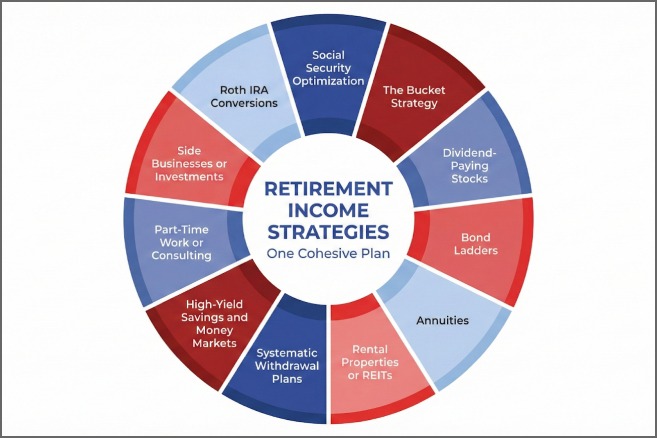
1. Dividend-Paying Stocks
When you’re learning how to generate income in retirement, dividend stocks often come up first and for good reason. These investments pay you recurring passive income just for owning them while also offering growth potential over the long term. The trick is finding companies with solid track records of maintaining and increasing their dividends through good times and bad.
2. Annuities
Insurance companies offer annuities that can provide guaranteed lifetime income streams which is incredibly valuable when you’re worried about outliving your money. Fixed annuities give you predictable payments. Variable annuities tie your returns to market performance. Each has tax advantages worth considering.
3. Bond Ladders
This strategy involves buying bonds with staggered maturity dates so you’ve got predictable cash flow coming in regularly while also reducing your exposure to interest rate risk. It’s methodical. It works.
4. Rental Properties or REITs
Real estate gives you ways to earn income after retirement that can actually keep pace with inflation since rents tend to rise over time. You can go hands-on with rental properties if you want that level of control or you can invest passively through REITs which trade like stocks but hold real estate portfolios.
5. Systematic Withdrawal Plans
Your withdrawal strategy determines how long your money lasts. Period. Systematic withdrawal plans give you structured portfolio income from your mutual funds and other investments while helping you manage safe withdrawal rates so you don’t pull out too much too fast.
6. Social Security Optimization
The difference between claiming at age 62 versus waiting until your full retirement age or even later can mean hundreds of thousands of dollars over your lifetime. Spousal benefits add another layer. Survivor benefits add yet another. This stuff gets complicated but getting it right matters enormously.
7. Part-Time Work or Consulting
Part-time work after retirement isn’t about grinding forever. It’s about staying engaged while generating income that takes pressure off your portfolio. The tax benefits can be significant too since earned income opens up certain planning opportunities.
In fact, some studies show that retirees who continue working, particularly in bridge employment (part-time or less demanding paid work), tend to report better mental health and lower depression compared with full retirement. Work can help preserve identity, social networks, and daily structure, all of which support emotional well-being.
8. High-Yield Savings and Money Markets
In retirement, you need liquidity. Short-term needs require accessible cash. High-yield savings accounts and money markets won’t make you rich, but they’ll preserve capital and provide emergency income support when you need it.
9. Roth IRA Conversions
Roth IRAs offer tax-free withdrawals in retirement, which can be incredibly powerful for retirement income planning, whether you’re a beginner or an experienced investor. Converting traditional retirement accounts to Roth accounts means paying income tax now but never again on that money. Long-term tax efficiency at its finest.
10. Side Businesses or Investments
Some retirees invest in small businesses that throw off income. A bed and breakfast. A food truck. Active income sources carry more risk but potentially more reward.
11. The Bucket Strategy
This approach divides your money into short-term, mid-term, and long-term buckets based on when you’ll need it. Money you need soon stays in cash. Money you won’t touch for a decade goes into growth investments. It stabilizes your retirement withdrawals and prevents panic-selling during market downturns.
How to Combine These Strategies Into One Plan
Knowing how to create a retirement income plan means understanding that no single strategy works perfectly on its own. You need diversification across income sources, just as you do across investments. Some retirees combine Social Security optimization with a bucket strategy and dividend stocks, while others prefer annuities, rental income, and part-time consulting.
Work with a fiduciary retirement advisor to determine which combination fits your life.
Common Retirement Income Mistakes to Avoid
The biggest mistake? Relying on one income source. Second biggest? Ignoring inflation and income tax implications until they bite you. Third? Withdrawing too aggressively early in retirement when your portfolio needs time to recover from market downturns.
These mistakes compound over time. Small errors become big problems.
When to Start Building Retirement Income Strategies
Earlier is better. Always. If you’re five years out from retirement, you’re not too early, but you’re getting close to being late. Your income strategies need time to mature, and your asset allocation needs time to shift appropriately.
Saving for retirement is step one. Turning those savings into sustainable income is step two.
Take Control of Your Retirement Income Today
Understanding how to increase retirement income isn’t about finding a single magic solution, because there isn’t one. It’s about layering multiple approaches, staying flexible as circumstances change, and planning proactively rather than reactively.
Start building your retirement income strategies today to enjoy financial stability and peace of mind tomorrow.
Frequently Asked Questions
What are the best retirement income strategies for beginners?
Start with Social Security optimization, a simple bucket strategy, and a diversified portfolio of dividend stocks and bonds. Build complexity over time as you learn.
How can I increase my retirement income safely?
Delay Social Security if possible, consider partial annuitization for guaranteed income, and maintain a balanced asset allocation that provides both growth and stability.
How do I generate income in retirement without working full-time?
Dividend stocks, rental properties or REITs, bond ladders, and systematic withdrawals from your portfolio all generate income without requiring full-time employment.
What are reliable retirement income options?
Social Security, annuities from reputable insurance companies, Treasury bonds, and dividend aristocrat stocks all offer relatively reliable income streams.
How do I create a retirement income plan that lasts?
Diversify your income sources, plan for inflation, keep some liquidity for emergencies, manage your withdrawal rate carefully, and review your plan annually as your financial situation evolves.
